Anthrodontics is the AI-powered consultation workspace for dentists. Capture consultations and turn complex diagnoses into clear visual presentations your patients can understand and revisit.
Every dentist knows the moment. The hesitation begins because the idea is still yours, not theirs: a diagnosis heard once, in unfamiliar words, that fades as soon as they leave the room.
It's not a gap in clinical skill. Patient often leave without the full picture: many can't read their own radiographs, and many more aren't sure why they need treatment.
Patients look after what they understand, and understanding is built in steps, often over more than one visit. Anthrodontics gives you something to show, share, and come back to at each one.
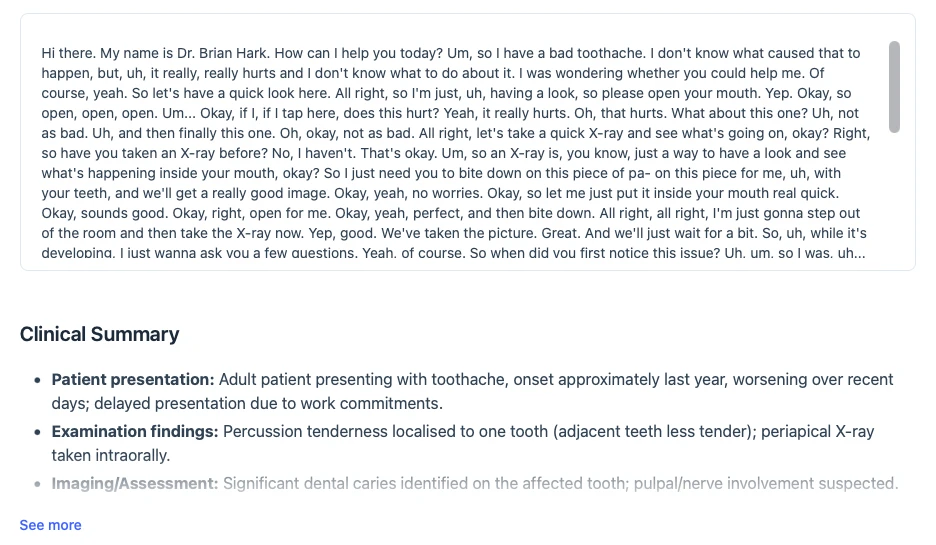
Record the conversation and bring your patient’s concerns, goals, photos, and your findings together. AI drafts the summary for you to review and edit.
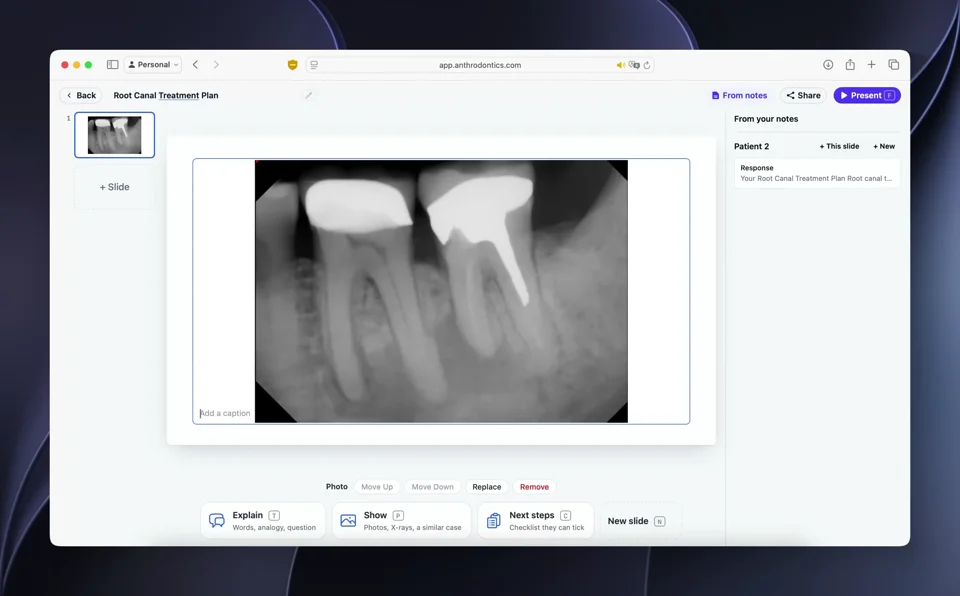
Use photos, X-rays, and examples to explain your findings. Patients scan a QR code to open the case presentation on their phone and follow along.
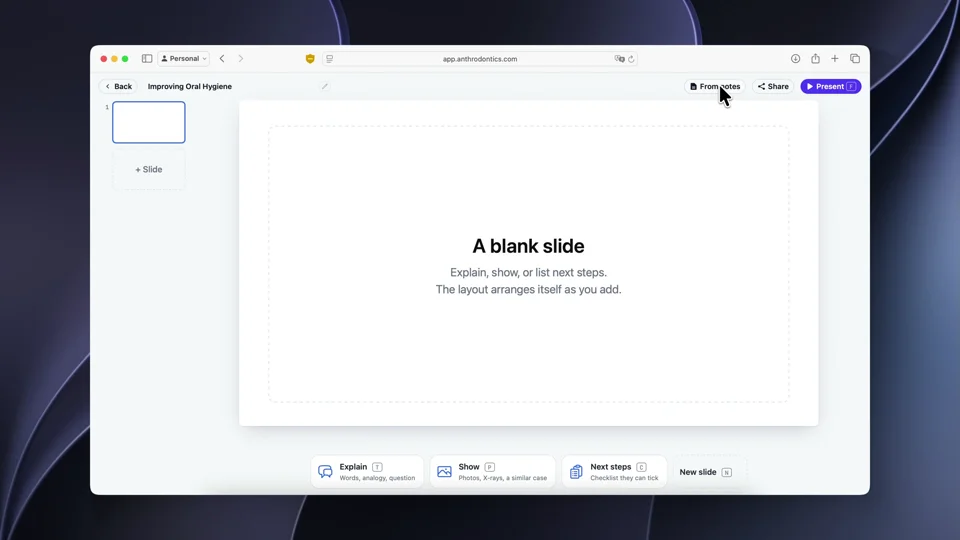
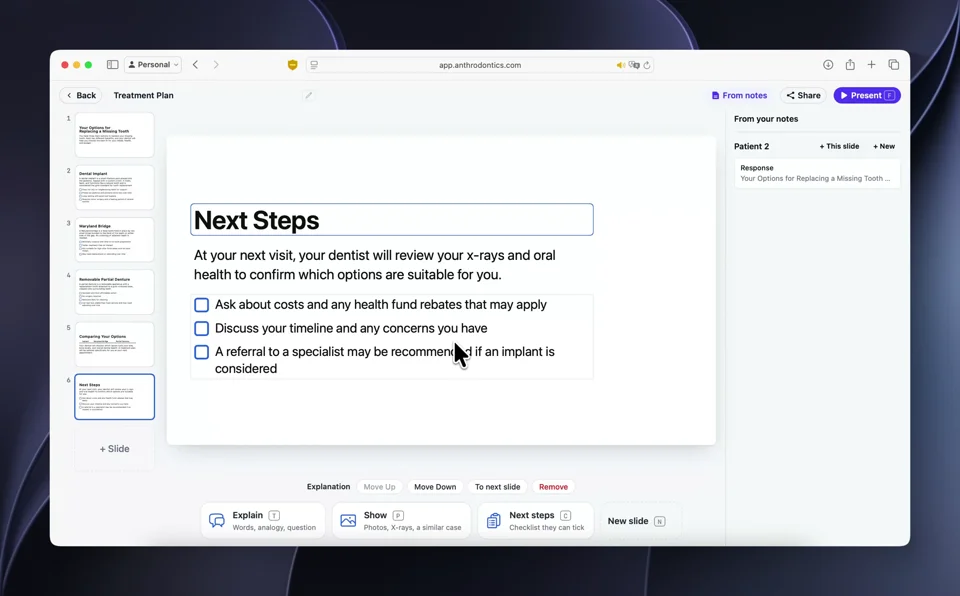
Create a presentation that explains the findings and treatment options in plain language. Add photos and diagrams so patients can understand the explanation, revisit it at home, and discuss it with someone they trust.
Patients can open the presentation again and message you directly with questions. Your reply arrives by email, and patients can reply to continue the conversation.
How you say it shapes what patients hear. Write your clinic’s phrasebook into a notebook’s setup instructions, and every draft in that notebook speaks the way you do.
Too often, patients come in only once something hurts, and the conversation is about repair. We think better explanations can move it earlier, to the small changes you can show them today, while there are often more choices and less to fix.
Anthrodontics was co-founded by Dr Brian Kim, a practising general dentist who has worked in rural and metropolitan practices across Victoria, New South Wales, and Queensland, and Richard Gal, an engineer from regulated, risk-sensitive industries who leads our security and AI governance.
We believe AI should amplify dentists’ voices, never replace them, and that clinicians should always be able to inspect, correct, and own what it produces.
Dr Brian Kim Co-founder and CEO · Practising general dentist
Richard Gal Co-founder and CTO · Security and AI governance
Not without your say-so. Drafts are built from what’s in your notebook, anything missing is marked “to be confirmed”, and nothing reaches a patient until you choose to share it, so you can edit every line first.
No. You make the diagnosis, and Anthrodontics helps you record it and explain it. It doesn’t give medical or dental advice, and it isn’t for diagnosis or emergency care. Every output is a draft for a qualified clinician to review.
Just the link you send them, with no app and no account. For a private presentation, they confirm their email address with a six-digit code.
Yes, for private presentations. You’ll see whether each person you’ve shared it with has opened it, and their questions arrive in your Messages inbox.
Yes. Add clinical photos and documents such as PDFs, Word files, and spreadsheets to a notebook, then place images straight onto slides.
No. It helps your patient understand and revisit what you discussed, which is part of building consent over more than one visit. Consent itself is still your conversation with them, recorded in your notes.
Not yet. Anthrodontics runs in the browser on desktop and mobile, and content moves in and out through file upload, notebook import, and export.
Yes. It’s made for the whole dental team, from dentists and specialists to hygienists, oral health therapists, prosthetists, and students. Each person has their own account and notebooks, and you can invite colleagues from Settings. Shared team workspaces aren’t available yet.
Yes. Explaining treatment is a skill worth building early. If you’re building your own patient list, your name, photo, and booking link go out with every presentation. Dental students and ADC candidates are welcome in the pilot too.
We don’t promise a number, and we don’t measure success by acceptance. We measure it by understanding: can your patient explain their treatment to someone at home in a few sentences? When they can, their decision about the care that’s right for them is genuinely theirs. We’ll share what we learn in the pilot.
There are four plans: Student, Basic, Clinician, and Specialist. We’ll send prices and details with your invitation.
Pilot data is due to be deleted when the pilot ends, so export anything you want to keep. The pilot terms have the details.
We’re inviting a small group of dentists to shape Anthrodontics with us: people who are curious about what’s next for dentistry, and careful about how we get there. Tell us about one conversation you wish had gone better, and we’ll be in touch with your invitation code.